Baseline Insights for Community-Based Coffee Development in Mekari village
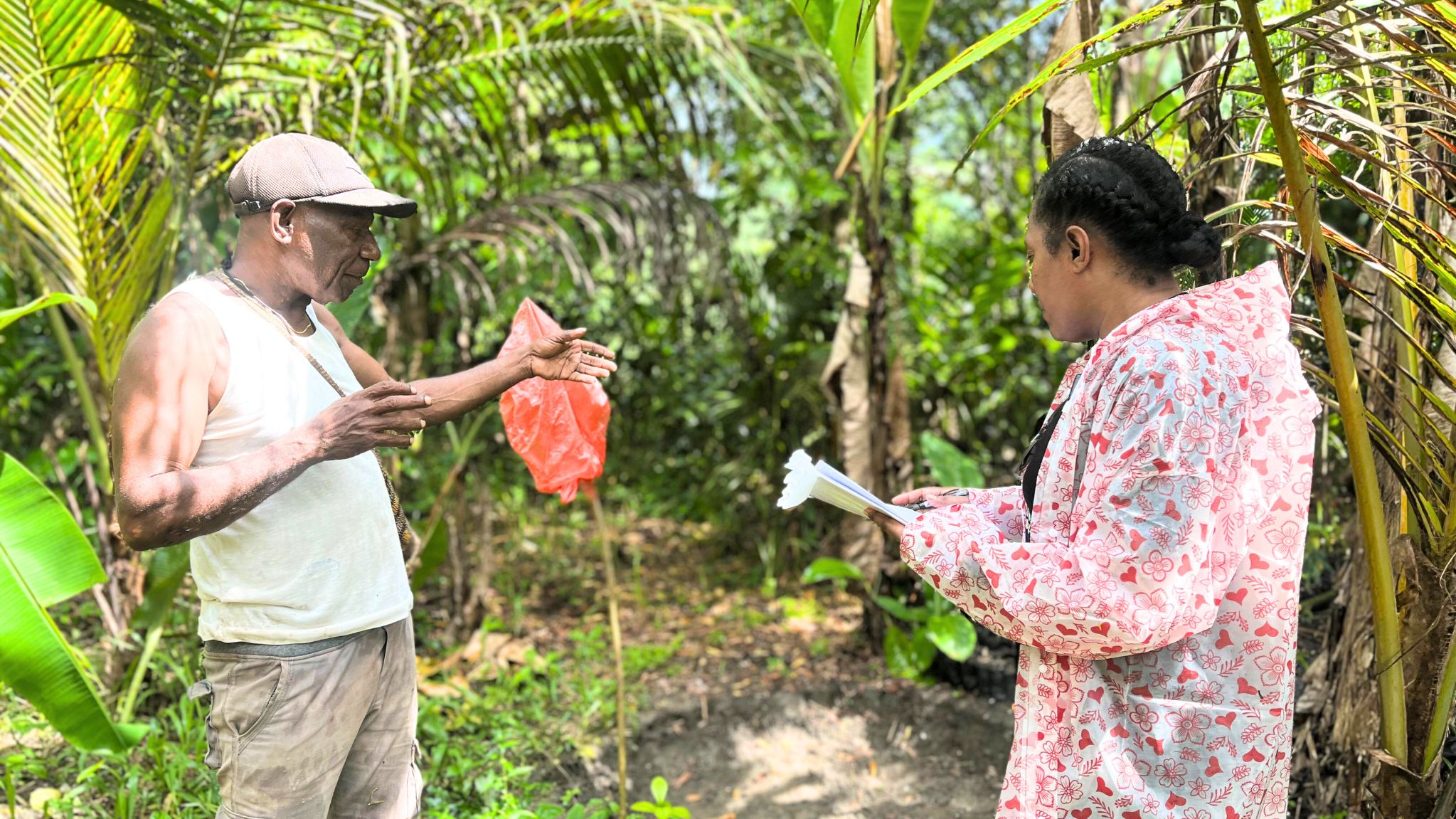
The community development project, titled “Identifying the Potential and Challenges of Smallholder Coffee Farming in Mekari Village, Kemtuk District, Jayapura Regency: A Baseline Study for Sustainable Development,” focuses on mapping the current condition of smallholder coffee farming, identifying key challenges, and exploring opportunities for sustainable development, particularly for Robusta coffee. The project was conducted in Mekari Village, Kemtuk District, Jayapura Regency, an area with strong potential for coffee cultivation and agroforestry-based farming systems.The baseline survey was conducted on 19 July 2025. The study involved smallholder farmer Matias Dameyap as the primary participant, supported by the community development team. The project applied a baseline study approach, combining field observation, farm mapping, and semi-structured interviews.
Before any meaningful change can take place, it is essential to pause, listen, and understand the realities on the ground. Understanding the actual conditions faced by farmers ensures that development interventions are relevant, well-targeted, and sustainable. This project was initiated to provide an evidence-based foundation for future community development efforts in Mekari village, where coffee presents both economic potential and livelihood opportunities. In addition coffee development in this area needs broader coffee supply chain context, where coffee collected from local farmers and distributed to cooperatives and sold to local roasteries such as Highland Roastery, which play an important role in processing green beans into consumable products. These linkages can assist local farmers in improving productivity of coffee as well their income (Runggeari, et al., 2025)
The baseline study documented a 1.12-hectare intercropped coffee plot with 1,300 coffee trees planted and 7,000 seedlings currently being raised. Coffee is cultivated alongside chili, duku, banana, breadfruit, and jackfruit. This diversified system supports household income while reducing dependency on a single crop. Mr Matias described the intercropping system as an ATM, enabling him to generate income from other crops while waiting for coffee harvesting time, a sustainable practice (agroforesty system) that supports household livelihoods and environmental conservation. Despite its potential, the study identified several key challenges, including limited experience in farm management and good agricultural practices, low youth involvement in coffee farming, unclear and unstable market pricing, inadequate post-harvest facilities, and minimal access to training and technical assistance, all of which reduce productivity and limit the long-term sustainability of smallholder coffee farming.
The team faced several challenges in the field, including unpredictable weather and heavy rain, which made access difficult due to muddy roads. Collecting GPS data near the river was also challenging as the ground was slippery and unsafe. In response, the team remained patient, wore rubber boots, and followed the farmer’s guidance to ensure safety and data accuracy.

The field experiences important lessons: farmers are open to innovation but require continuous guidance and sustained support, and agroforestry is a more suitable approach since Papuan farmers depend on multiple crops for their livelihoods. The farmer expressed satisfaction with the project, viewing it as valuable new knowledge that could lead to improved guidance and stronger support in the future. Overall, this project highlighted the importance of listening to farmers’ lived experiences and recognizing existing good practices within the community. While smallholder farmers already apply adaptive and environmentally friendly systems, they still need structured support, improved market access, and capacity building to fully realize their long-term potential.
This baseline study provides a clear picture of the current conditions, potential, and challenges of smallholder coffee farming in Mekari Village. Although the area has strong potential for Robusta coffee development through agroforestry systems, farmers still face challenges related to farm management skills, youth involvement, market access, and post-harvest facilities. The findings show the importance of development efforts that are relevant to local conditions and centered on farmers’ needs. Building on existing good practices, continued guidance, capacity building, and better market connections are needed to support the long-term sustainability of smallholder coffee farming in Mekari Village.
References:
- Runggeari, L., Wetipo, Y., & Rifanto, D. (2025). Supply chain of Arabica coffee in the Papua Highlands: A case study of Highland Roastery and Emas Hijau Cooperative. Proceedings of the National Seminar on Agricultural Development and Vocational Education, 6(1).https://doi.org/10.47687/snppvp.v6i1.18921544
| Disclaimer:AI tools were used to improve language clarity and structure of this article. The core ideas, data collection, analysis and results are derived from the author’s original research and project implementation. |
Author :

English Tutor

You may also like
1-Day Training Workshop For GKI Sunday School Teachers