Strengthening Digital Skills for Learning and Work: A Community Development Program for Fategomi Youth in Jayapura
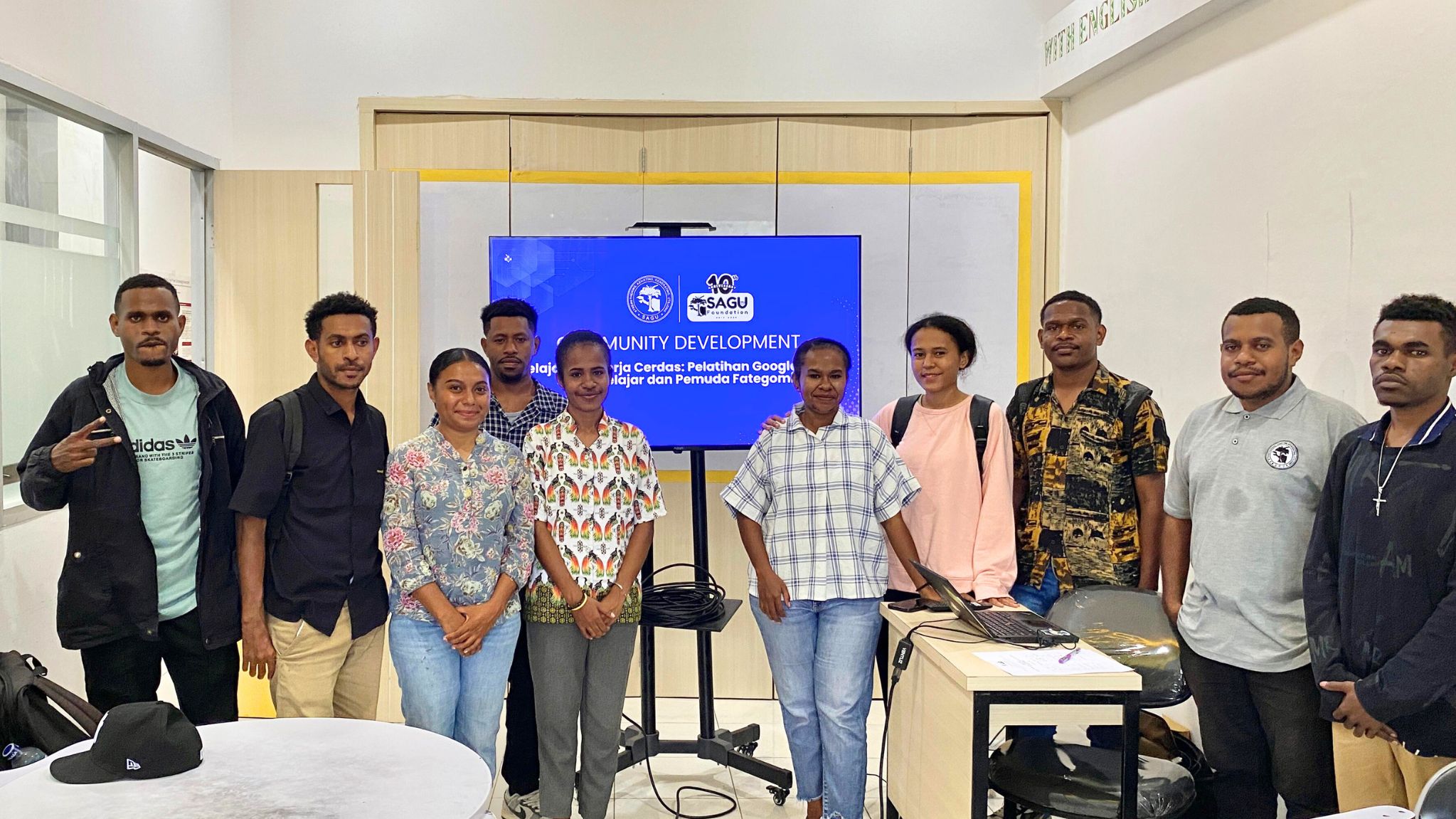
As my Community Development (ComDev) project for Cycle 2/2025, I conducted a training entitled Smart Learning and Working: Google Apps Training for Students and Youth of Fategomi. It was an individual project with 12 participants from the Aitinyo Utara District Association, Maybrat, Kampung Fategomi, who were residing in Jayapura for educational and employment purposes. The training was conducted at the SAGU Foundation Office and was supported by adequate facilities, including laptops, internet access (WiFi), and a comfortable classroom environment. It was carried out over six sessions in August. Each training session lasted two hours, from 10:00 a.m. to 12:00 p.m. WIT. The training employed a hands-on learning approach, focusing on the practical use of Google Apps to improve learning and work effectiveness.
In the context of rapid digital transformation, digital skills have become essential competencies in both educational and professional settings (Binus Online Learning, 2025). Students and youth are expected to adapt to evolving digital trends to remain competitive. However, based on my observations through continuous interaction with local students and youth, many still lack fundamental skills in basic computer use and productivity tools. As a senior member of the Fategomi youth community in Jayapura, I felt a sense of responsibility to contribute. Consequently, this ComDev project was initiated to address these needs by providing practical training in basic computer literacy and essential Google Apps, including Gmail, Google Drive, Google Docs, and Google Spreadsheets, to support academic and work-related activities in a more efficient and structured manner.
The results of this ComDev program indicated a significant improvement in participants’ ability to use Google applications. Participants who were previously unfamiliar with Google Drive demonstrated the ability to organize files and folders systematically. In addition, they gained an understanding of online collaboration through Google Docs and Google Spreadsheets, enabling them to work simultaneously on shared documents. These improvements were observed consistently throughout each training session, as participants showed increased confidence and competence.
An evaluation survey was conducted to measure participants’ perceptions of the training. All participants stated that the objectives of the activity were communicated very clearly, and the quality of the Google Apps training materials was very good. Furthermore, the delivery of the material was also rated as very engaging and easy to understand by all participants. Additional feedback from participants highlighted improved understanding of effective team communication, better time and task management, and increased proficiency in using email, Google Docs, Google Drive, Google Spreadsheets, and ten-finger typing techniques.
One of the main challenges encountered during the implementation of this ComDev program was monitoring participants’ progress. The relatively large number of participants and their diverse levels of digital literacy required careful planning and time management. Ensuring that each participant received adequate guidance during task completion was time-consuming and required additional instructional strategies.
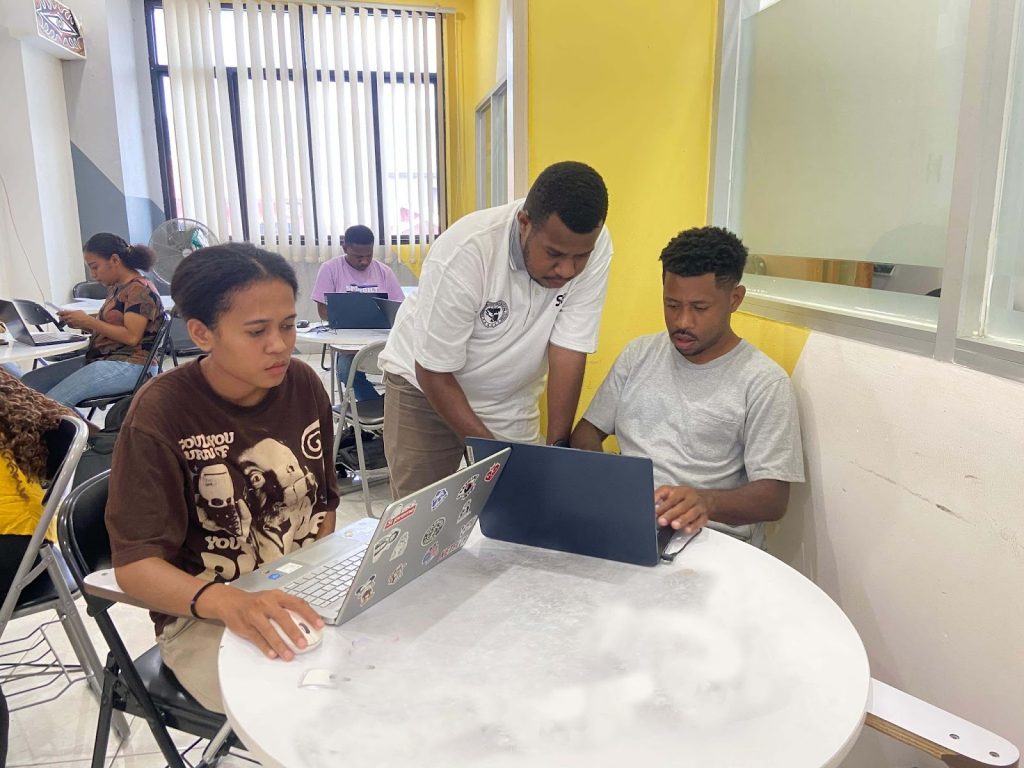
This experience highlighted that effective community-based training extends beyond content delivery and facilitation techniques and requires a structured support system. As the sole facilitator, it became evident that the initial facilitation approach was insufficient to comprehensively address the diverse learning needs of all participants simultaneously. This realization underscored the importance of incorporating assistant tutors in future implementations to ensure more focused and individualized guidance. Furthermore, the application of peer-assisted learning emerged as a valuable pedagogical strategy. Encouraging participants with higher proficiency levels to support their peers contributed to reducing learning disparities, enhancing collaborative learning, and fostering a sense of shared responsibility. Overall, this experience reinforced the significance of adaptability, collaborative structures, and continuous reflective practice in the successful implementation of comdev programs.
Digital literacy is a crucial competence for academic and professional development, particularly in Papua, where access to education and human resource development remains limited. This ComDev program represents SAGU Foundation’s commitment to strengthening youth capacity as part of its ten-year concrete effort to empower local communities. The challenges encountered and lessons learned during implementation highlight the importance of adaptive facilitation, structured support systems, and peer collaboration in community-based training. Overall, this program demonstrates that ComDev initiatives can play a strategic role in fostering sustainable digital skills and preparing Papuan youth to engage in an increasingly digital society.
References
- Binus Online Learning. (2025, October 23). Essential digital skills for today’s university students. BINUS University. https://online.binus.ac.id/2025/10/23/skill-digital-yang-wajib-dimiliki-mahasiswa-zaman-sekarang/
| Disclaimer: This article was originally drafted in Bahasa Indonesia and translated into English with the assistance of AI (ChatGPT by OpenAI). AI was also used to support the writing and editing process. |
Author :

Web Developer & Computer Literacy Tutor

You may also like
1-Day Training Workshop For GKI Sunday School Teachers

English Fun Day With Books