Student Research Visit to SAGU Foundation: Exploring Adult Learning Strategies in Development

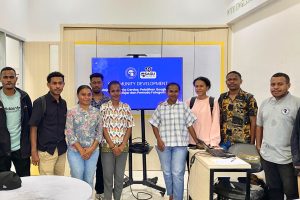
On April 25th, 2025, a student research visit was conducted at SAGU Foundation by Nasrah, a second-semester student from the Department of Educational Guidance and Counseling, Faculty of Teacher Training and Education, Cenderawasih University. This visit was part of the Andragogy course, which explores theories and practices in adult education.
Understanding Andragogy?
In the field of education, three major learning frameworks are commonly recognized: Pedagogy, Andragogy and Heutagogy. Below is the short explanation of those three principals.

Focused on Andragogy, it refers to the methods and principles used in adult education. Popularized by Malcolm Knowles, andragogy emphasizes the importance of self-directed learning, experiential knowledge, readiness to learn, and the immediate application of new skills. In adult learning, the learner is seen as an active participant with valuable life experiences that enrich the learning process.
Data Collection at SAGU Foundation
The primary method of data collection during the research visit was an interview with Ms. Diana Kambuaya, Academic Program Manager at SAGU Foundation. The purpose of the interview was to gather information about SAGU Foundation as an educational organisation that is implemented training for adults, particularly in English and soft skills training.


The interview explored several key aspects of SAGU Foundation as an educational development organization. These included the history and founding purpose of the institution, its organizational structure and strategic goals, and the curriculum models implemented—particularly those grounded in contextual and adult learning principles. It also examined the qualifications and roles of both teaching and administrative staff, the academic performance and progression of students during their study, as well as the foundation’s institutional strengths, such as community engagement and learner-centered practices. Finally, the discussion addressed ongoing challenges, including sustaining adult learner motivation and expanding access to many youth communities across Papua.
Conclusion
This research visit provided valuable insights into the practical application of adult learning theories within a development program context. SAGU Foundation exemplifies how andragogical approaches can be effectively implemented to foster lifelong learning and empower communities in Papua.
As the Academic Program Manager, I believe SAGU Foundation serves as a vital resource for university students seeking opportunities for research, internships, or data collection. In regions where academic resources are limited, organizations like SAGU can play an essential role in supporting the next generation of educators and researchers.
Author :

Program Manager

You may also like
1-Day Training Workshop For GKI Sunday School Teachers