Empowering English Learning through Contextual Teaching in GKI Eden Phokow Christian Youth Community
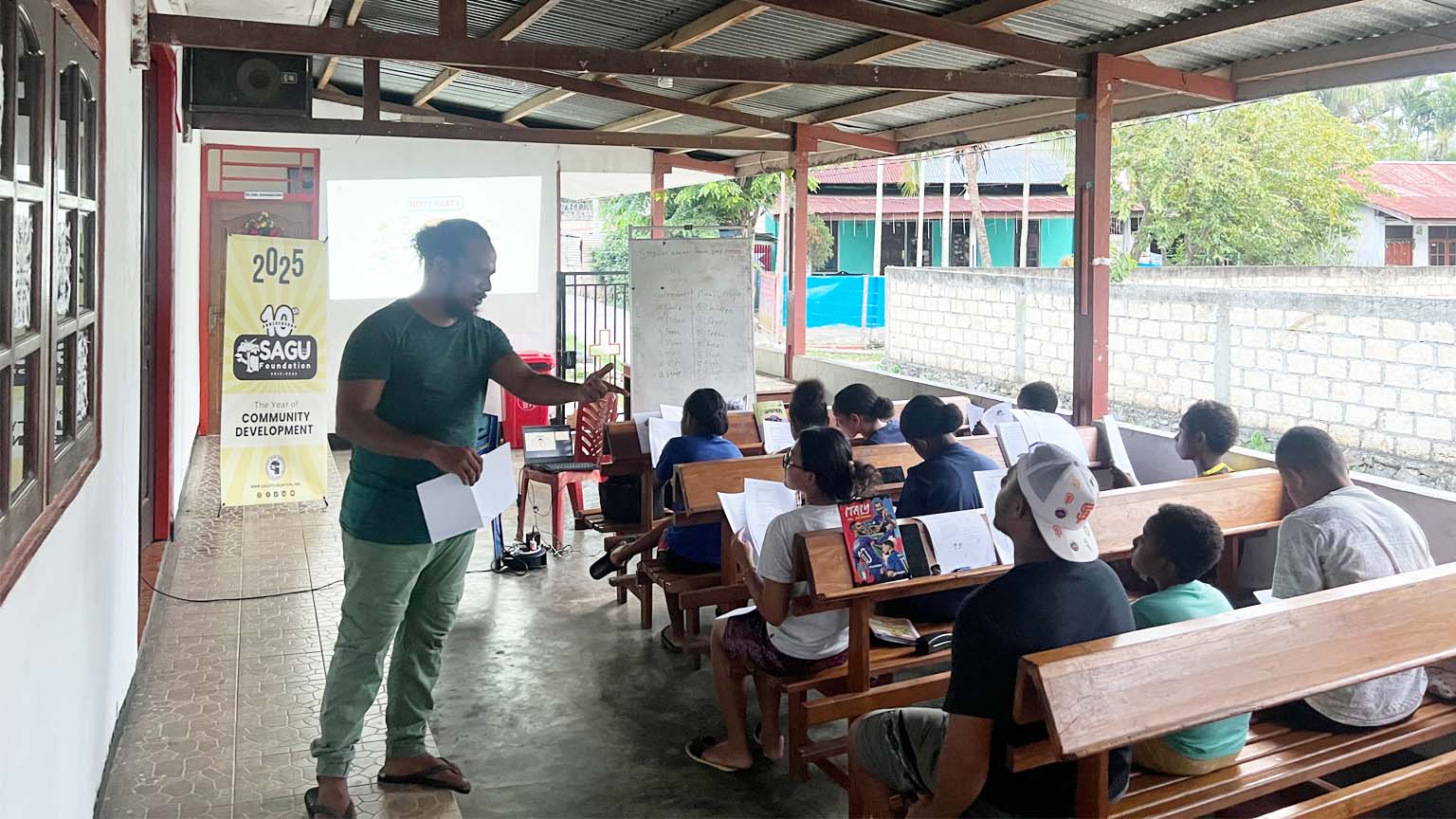
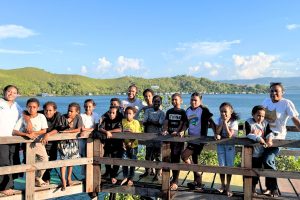
Combining my background in linguistics and my role as a tutor, I designed a small-scale English training for Papuan youth. The project was carried out in Jayapura with Christian youth from GKI Eden Phokow, with the goal of improving their English skills through a contextual learning approach based on local Papuan culture.The training involved 5 to 10 students and was intentionally kept small to allow for personalized instruction and active participation. The program ran for one month, from February to March 2025, with classes held twice a week for a total of 10 sessions. The teaching method used was contextual learning rooted in Papuan culture, utilizing the English Papuan Contextual Coursebook.
This project is important to me because the community I aim to serve is also my own, and I want to contribute something meaningful to it. Moreover, the English Papuan Contextual Coursebook, designed by Ms. Diana, Ms Emma, Mr Romibo and myself, enables me to teach the youth in Phokow grammar and vocabulary in a way that connects deeply with their own context. I have seen how effective the contextual approach is in helping students learn, and I believe it can significantly benefit this community. As a linguistics graduate and an English tutor, this project represents both my personal values and professional passion.
After two months of implementation, students learned basic grammar and vocabulary. By studying these foundational elements through a Papuan contextual approach, participants showed noticeable improvements in speaking and reading simple English texts. Although attendance declined over time, the program sparked enthusiasm beyond just the youth—young children also became eager to join the English classes.

A feedback survey was completed by four students, and the results were very positive. All respondents said they thoroughly enjoyed the class and gave the teacher five-star ratings. They found the explanations clear, the pace of teaching just right, and the activities—especially speaking practice, games, and listening exercises—both fun and engaging. The majority of the students felt their English had improved significantly, and all agreed the materials were helpful. Everyone expressed interest in joining future classes and appreciated the experience as both enjoyable and meaningful. Receiving such encouraging feedback from my students made me feel deeply grateful and motivated to continue delivering engaging and impactful lessons.
The main challenge during the class was irregular attendance, as some participants had family or work commitments. I also observed a general lack of awareness about the value of self-development through learning English. I believe it is important to raise awareness of the long-term benefits of English proficiency—perhaps through community outreach or educational campaigns that highlight how English can open up more opportunities for work, study, and personal growth. In the future, I plan to collaborate with Sunday school teachers or church youth leaders to hold short English motivation sessions to build interest and commitment.
I learned that meaningful learning must be relevant to the learners’ lives. Using local context not only made the material easier to understand but also built students’ confidence and pride in their identity. I also learned the importance of flexibility in planning schedules and teaching methods to adapt to the students’ unique situations.
This community development project highlighted the potential of using a contextual approach to engage Christian youth in Phokow, Jayapura, in learning English, paving the way for further improvement and exploration. By using the English Papuan Contextual Coursebook and integrating local culture into the learning process, students not only improved their basic grammar and vocabulary skills but also gained confidence in using English. Despite challenges such as irregular attendance and limited awareness of the importance of English, the program generated enthusiasm and interest among both youth and younger children. This project reaffirmed that education becomes more impactful when it is relevant, culturally grounded, and delivered with flexibility. Moving forward, efforts to raise awareness and provide continued support could help sustain and expand the impact of this initiative.
| Disclaimer:This document has been proofread with the assistance of artificial intelligence (AI) tools. While AI support helps enhance clarity, grammar, and style, it may not catch all errors or account for context-specific nuances. Final responsibility for accuracy, appropriateness, and content integrity rests with the author or reviewers. |
Author :

English Tutor

You may also like
1-Day Training Workshop For GKI Sunday School Teachers